Human exposure
Increase stand-off distance for routine inspection, material delivery and first-look assessment.
Hazardous operations
ASSIST / HAZ—03
Send the platform. Keep people farther from risk.
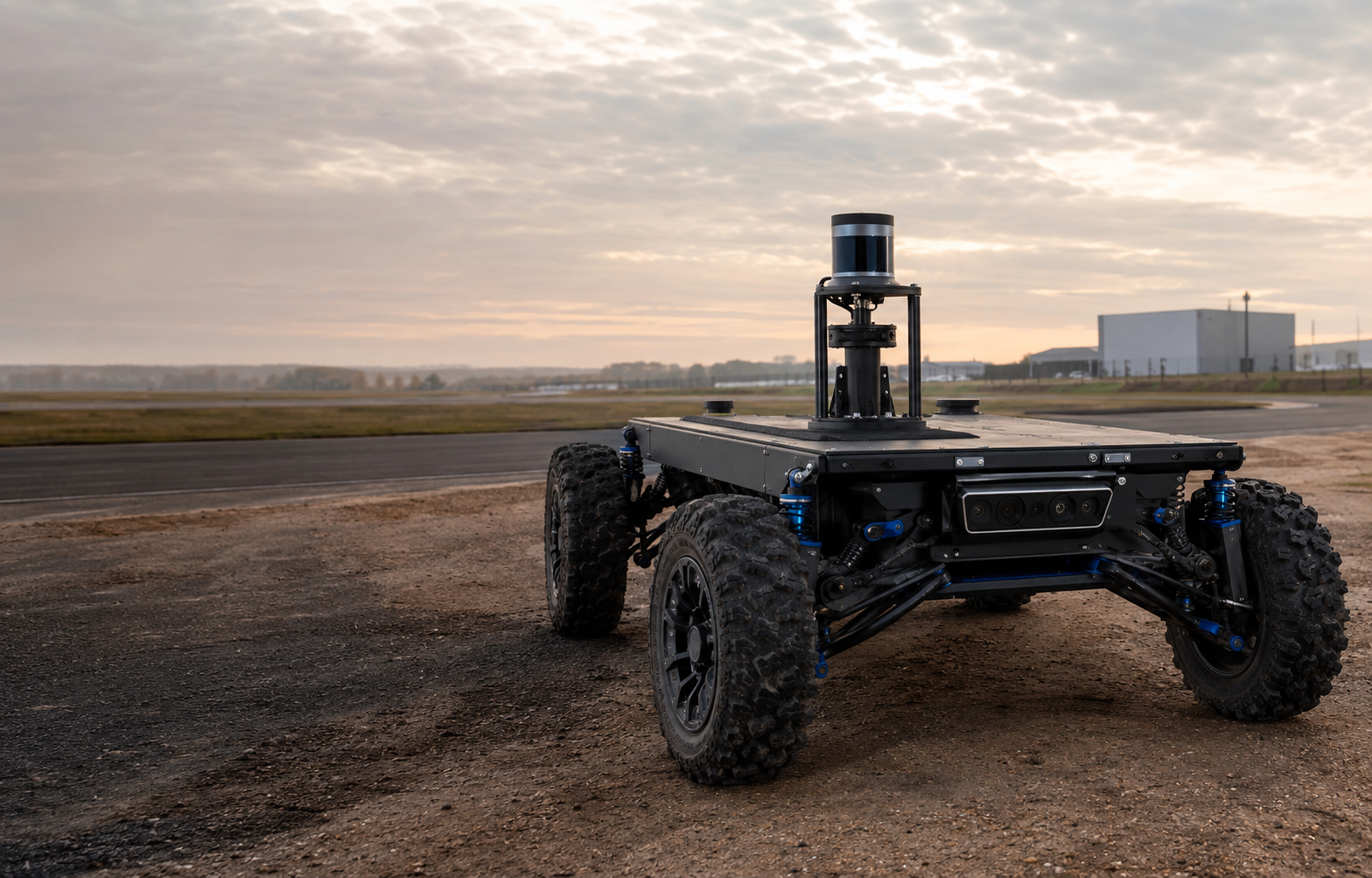
A remotely supervised unmanned carrier for inspection, payload transport and repetitive work near heat, chemicals, unstable terrain or restricted zones.
Operational reality
ASSIST combines electric mobility, configurable autonomy and modular tooling to make difficult movement safer and more repeatable.
Increase stand-off distance for routine inspection, material delivery and first-look assessment.
Use LiDAR, depth sensing, cameras and telemetry to improve remote situational awareness.
Combine manual RC, tele-operation and supervised autonomy as the environment changes.
Mission applications
ASSIST is configured for the hazard, communication environment and recovery plan. It supports the mission team; it does not replace the plant’s emergency-response procedure or certified safety systems.
Send cameras, thermal imaging or environmental sensors into a defined risk zone before personnel enter.
Carry response equipment, replacement parts, samples or supplies between a safe staging point and the work area.
Repeat supervised inspection routes around process areas, yards, tunnels, utilities or isolated infrastructure.
Provide a remotely operated platform for situational awareness and payload delivery under an approved incident plan.
ASSIST in the field
These realistic application visualisations show how the ASSIST platform can support inspection and payload missions while operators remain at an assessed stand-off position.
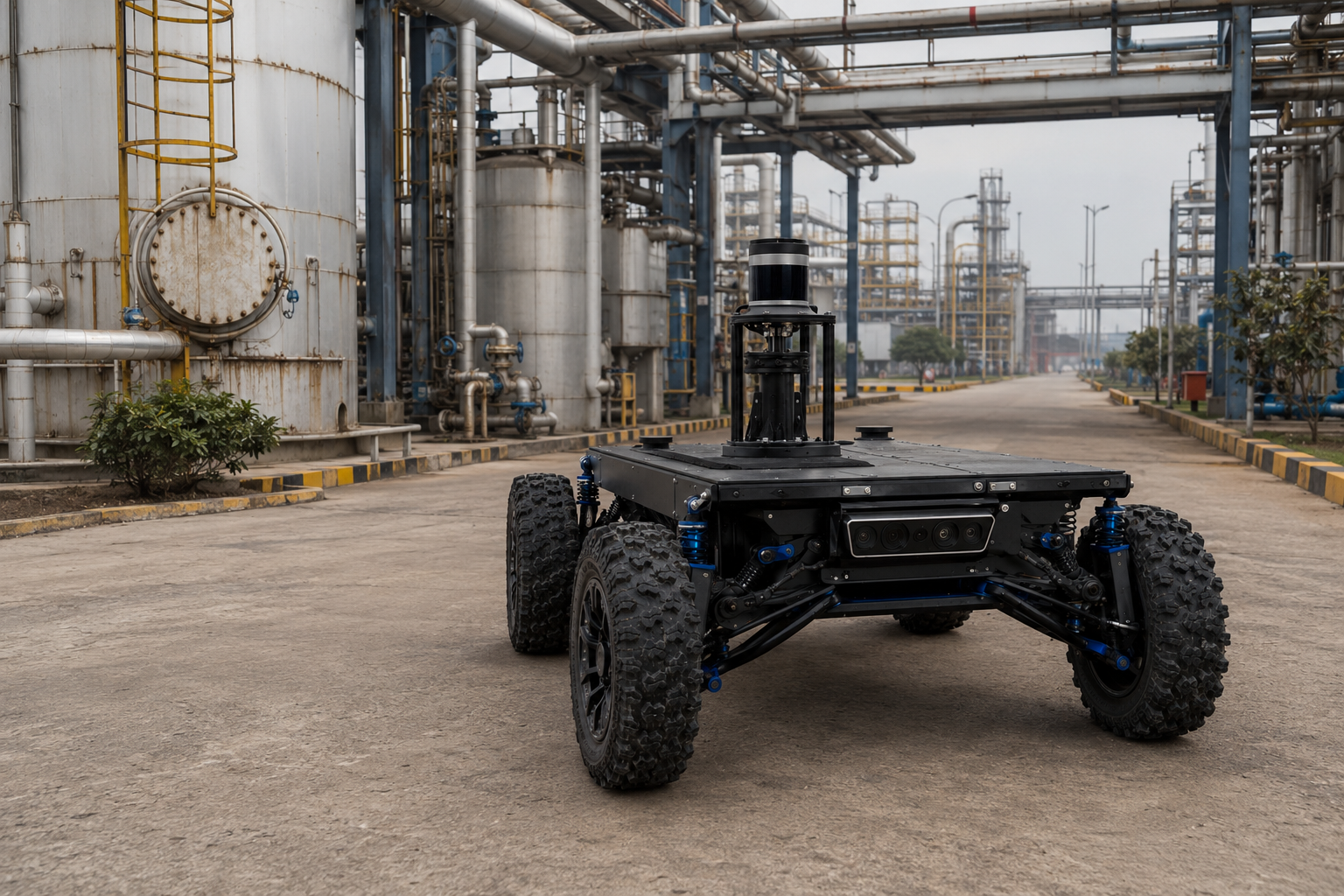
Observe equipment, routes and defined sensor checkpoints without beginning with a personnel entry.
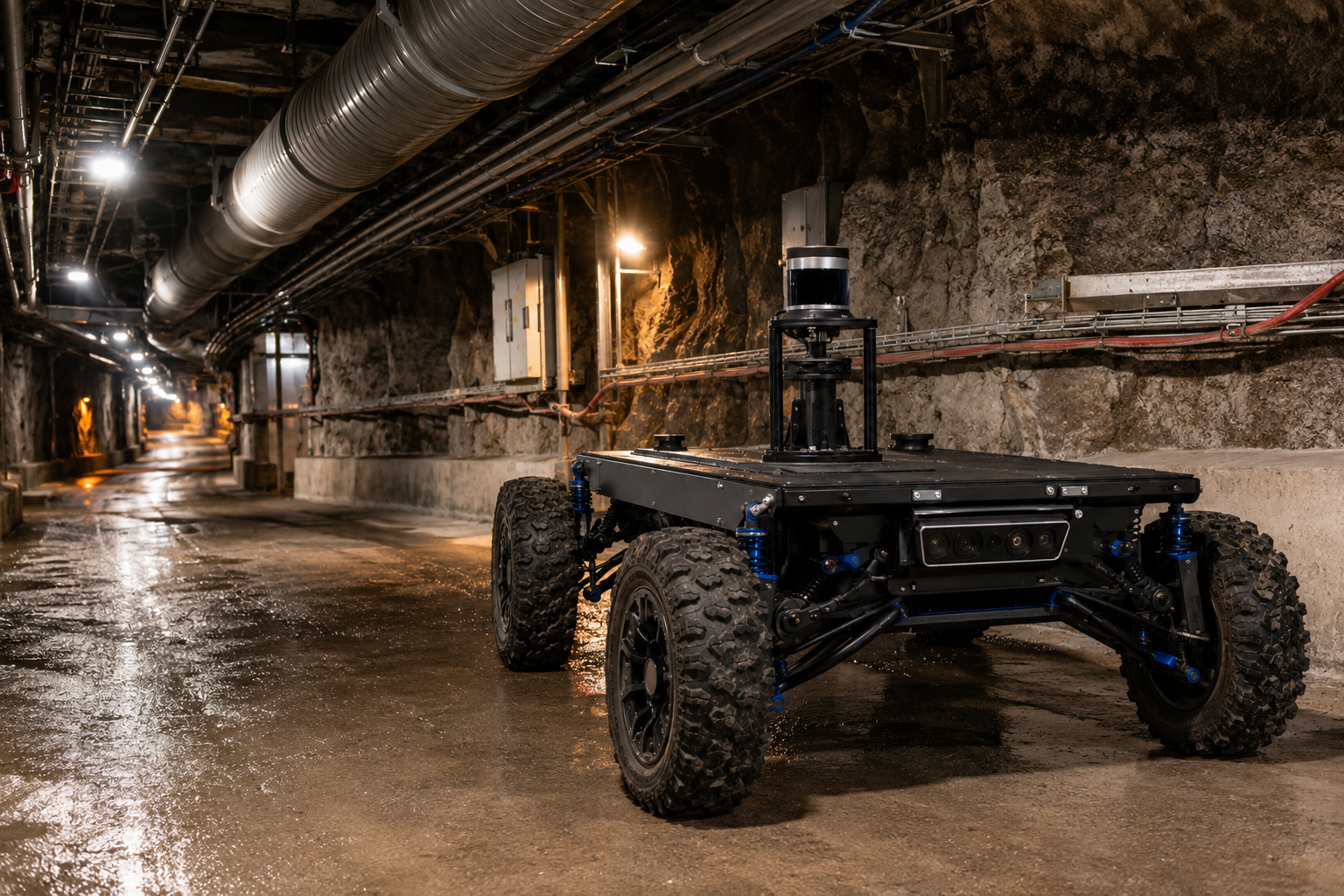
Extend camera, LiDAR and environmental sensing into damp, dark or access-controlled passages.
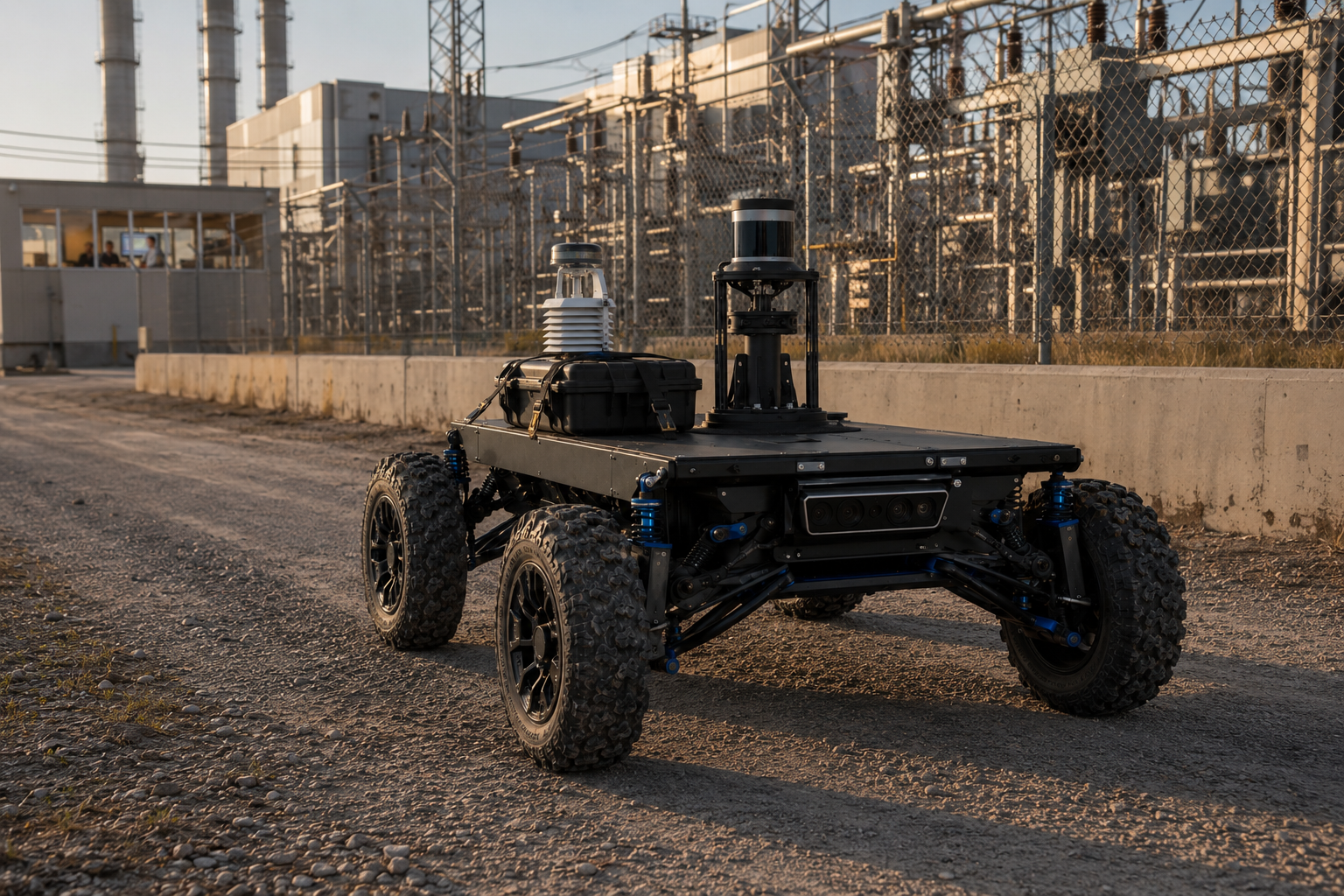
Move sealed tools, samples or sensing payloads between a safe staging area and the approved work zone.
Application visualisations based on the ASSIST platform. Final sensors, payload, certification, communication range, operating zone and recovery method are engineered for each deployment.
Control strategy
The operating mode is selected from the route predictability, visibility, communications, proximity to people and the operator’s ability to intervene.
Close-range operator control for setup, loading, recovery and tightly supervised movement.
Commissioning and recoveryLive camera, telemetry and command from a defined stand-off position within the verified communication envelope.
Dynamic or changing conditionsMapped routes, checkpoints and speed zones with an operator able to pause, intervene or abort the mission.
Repeatable approved routesAssisted movement with a designated operator where the site risk assessment permits personnel to remain nearby.
Controlled logistics supportDeployment qualification
A pilot moves from a safe test area to realistic conditions only after each gate is documented and accepted by the responsible site team.
Identify heat, chemical, visibility, terrain, process and access risks.
Mark exclusion boundaries, stopping areas, crossings and recovery access.
Verify command, video and telemetry performance across the complete route.
Confirm sensor, tool, load, mounting, power and data-interface requirements.
Prove emergency stop, link-loss response, safe stop and vehicle-health alerts.
Practice abort, return, isolation and manual retrieval before mission approval.
Important application boundary
Standard ASSIST specifications must not be interpreted as ATEX, IECEx, PESO or mine-permissible certification. Operation in a classified explosive atmosphere requires a separate certification and engineering assessment for the complete vehicle, battery, motors, electronics, sensors and payload.
Mission workflow
Define hazards, exclusion zones, communications and recovery requirements.
Configure sensors, camera views, payload deck and mission-specific tooling.
Operate from a safer position with live control and vehicle health data.
Use defined abort, safe-stop, return and manual recovery procedures.
Application configuration
The platform is configured only after the hazard source, exclusion zone, required stand-off distance, sensor or payload, communication coverage, route condition, stopping behaviour, operator roles and recovery method are defined and reviewed.
Provide the operator with forward, rear and surrounding views for first-look assessment and route supervision.
Observe abnormal heat patterns on equipment or infrastructure from a controlled stand-off position.
Carry compatible gas, air-quality or site-specific sensors and transmit readings with location and time.
Transport tools, supplies, samples or mission equipment between the safe staging point and work zone.
Follow an approved mapped route with checkpoints, speed zones and operator supervision.
Define emergency stop, communication-loss response, safe-stop location, return behaviour and manual recovery.
Pilot success measures
The pilot begins in a controlled area. Hazard boundaries, communication limits, stopping behaviour, operator roles and recovery steps are verified before realistic mission trials.
Start with one route
Share the hazard type, site and route, required stand-off distance, payload or sensing need, communication conditions, operating duration, exclusion-zone rules and recovery procedure. Our team will prepare a controlled feasibility and pilot plan.
Phone+91 86006 24579Emailsales@borseautomotive.comPlan your ASSIST pilot ↗