Repeated manual trips
Automate predictable milk runs and reduce non-value-added walking, cart movement and forklift dependency.
Industrial application
ASSIST / IND—02
Material arrives. Production keeps moving.
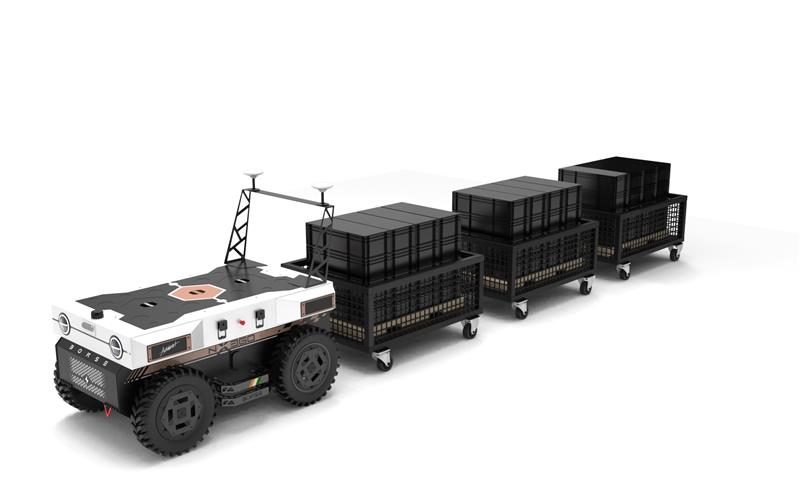
A flexible autonomous carrier for line feeding, stores-to-line movement, inter-building logistics and towing—without installing a fixed conveyor.
Operational reality
ASSIST combines electric mobility, configurable autonomy and modular tooling to make difficult movement safer and more repeatable.
Automate predictable milk runs and reduce non-value-added walking, cart movement and forklift dependency.
Reconfigure routes as cells, stores and dispatch areas change—without permanent floor infrastructure.
Combine supervised autonomy, obstacle detection and low-speed control for shared operating areas.
See ASSIST at work
Start with the route that causes the most waiting, walking or forklift dependency. ASSIST can tow a trolley train or carry material on its deck, then repeat the movement on schedule or on demand.
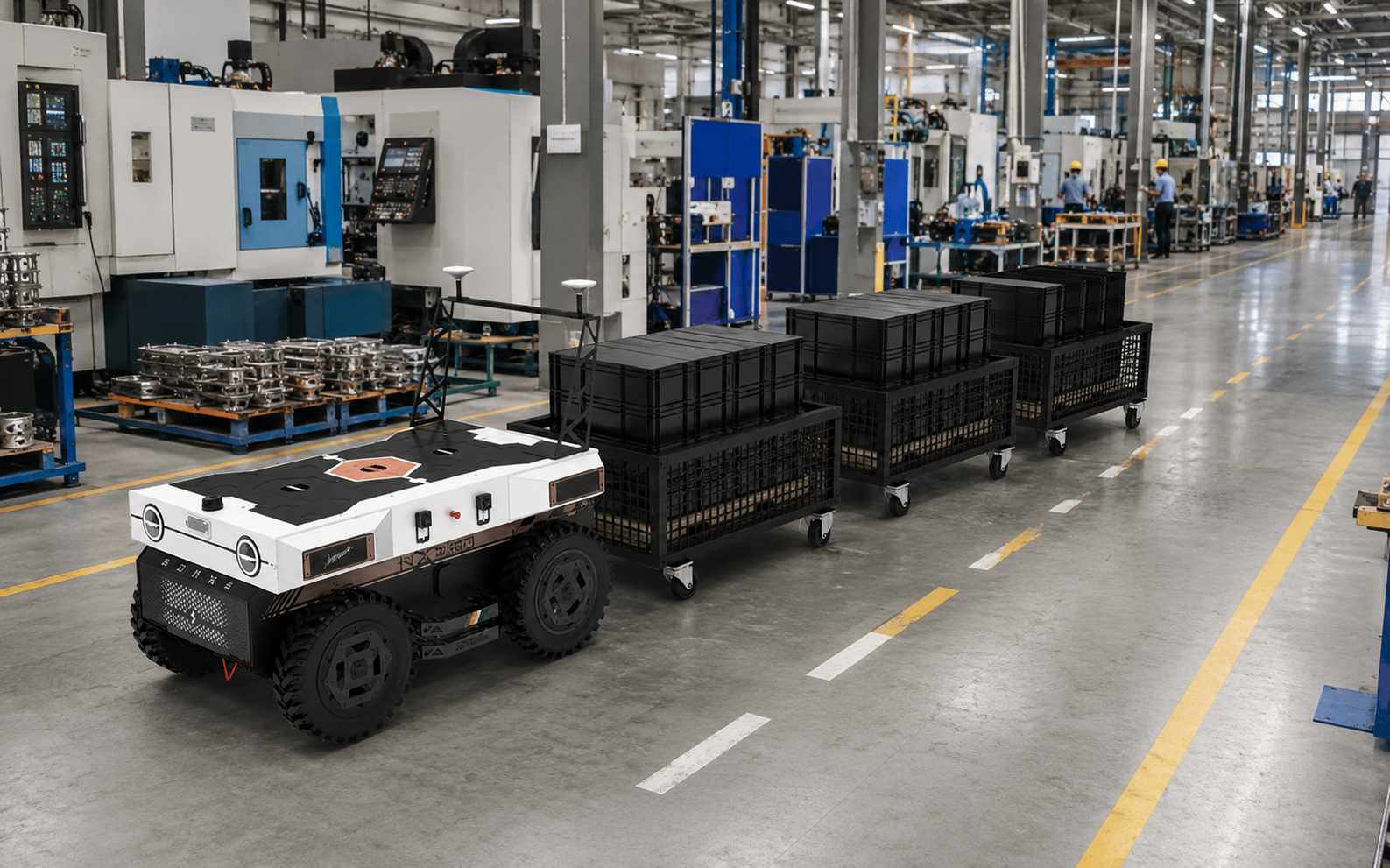
Move kits, WIP bins and components from stores or supermarkets to machining and assembly cells.
Assess this route ↗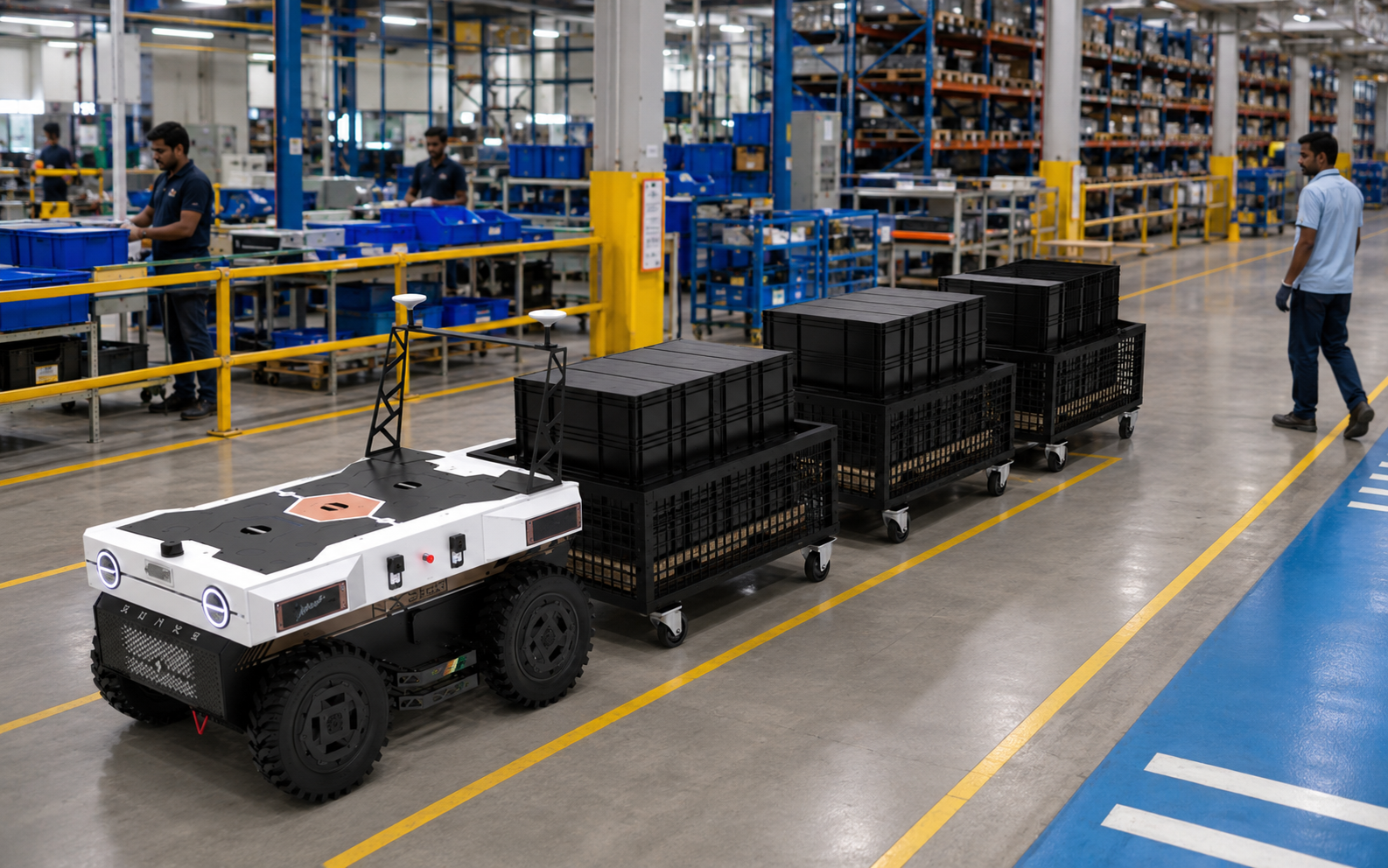
Connect racks, kitting stations, stores and production with predictable replenishment trips.
Plan a milk run ↗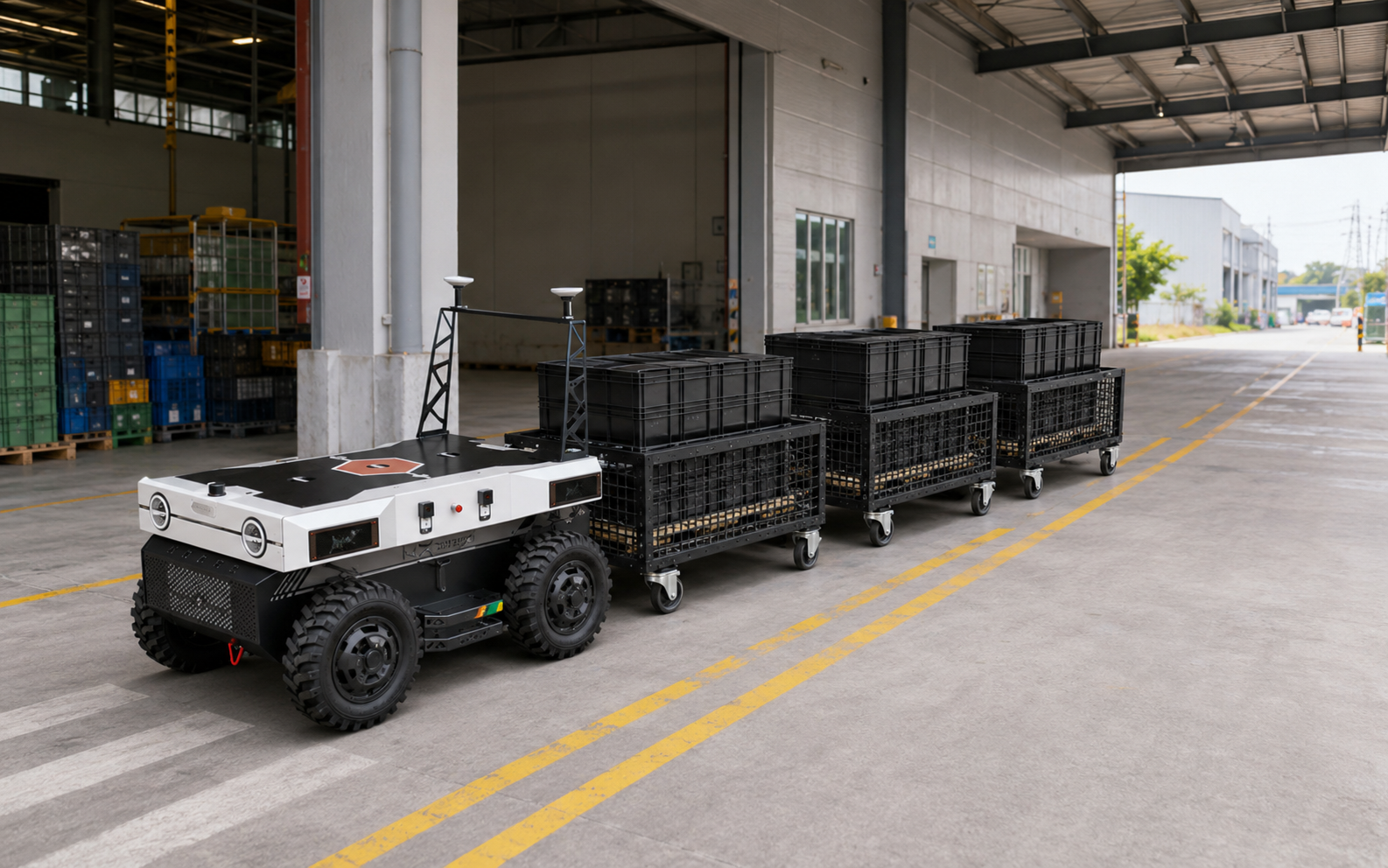
Move finished goods, returnable packaging and parts across covered plant routes and loading areas.
Check route fit ↗Application visualisations based on the ASSIST M1 platform. Final trolley count, load, route and safety design are validated for each plant.
Free initial route review
You do not need a complete automation specification. Send six basic details and the Borse Automotive team will identify whether ASSIST is suitable, which operating mode fits, and what to measure during a pilot.
RouteFrom where to where, distance and floor condition
LoadMaterial, trolley type and maximum weight
FrequencyTrips per shift and required delivery interval
TrafficPeople, forklifts, crossings and doors
IntegrationManual call, schedule, barcode, PLC or ERP trigger
Success targetLower cost, fewer delays, less walking or safer movement
Mission workflow
Measure route, takt time, load profile, traffic and handover points.
Configure trolley, carrier deck, call station and production interfaces.
Run scheduled, on-demand or operator-supervised material missions.
Track trips, delays, utilisation and cost per completed movement.
Application configuration
Each deployment is engineered around the actual material route: load and trolley geometry, aisle width, floor and ramp condition, takt requirement, charging window, pedestrian and forklift traffic, crossings, doors, pickup and drop stations, and the required production-system trigger.
Carry bins, kits, tools or WIP directly on the vehicle deck.
Tow compatible cage trolleys for milk runs and bulk movement.
Align with defined pickup and drop points for controlled transfer.
Request a vehicle from line-side using a button, HMI or digital trigger.
Navigate mapped aisles with defined stops, crossings and speed zones.
Connect missions to production calls, scans or plant systems.
Pilot success measures
We first record the current manual or forklift route, then compare ASSIST on the same load, distance, traffic condition and shift pattern.
Start with one route
Share the pickup and drop points, route distance, maximum load, trolley dimensions, trips per shift, aisle constraints, traffic interactions and current movement method. Our team will return a route-fit review, recommended configuration and measurable pilot plan.
Phone+91 86006 24579Emailsales@borseautomotive.comPlan your ASSIST pilot ↗